Online Quran Classes for Kids: A Parent's Guide
Looking for online Quran classes for kids? Learn what parents should consider when choosing a Quran programme, schedule, learning environment and course.

Online Quran Classes for Kids: A Parent's Guide
Choosing Quran classes for your child is an important decision.
Parents often want lessons that fit around school, provide a clear learning path and help children develop confidence without making learning unnecessarily difficult.
Online Quran classes can be a convenient option for families who prefer to learn from home.
But before choosing a programme, there are several things worth considering.
1. Understand Your Child's Current Level
Every child starts from a different point.
Some children may already recognise Arabic letters, while others may be complete beginners.
Before choosing a course, consider whether your child can:
- Recognise Arabic letters
- Read simple combinations
- Read Quranic words
- Pronounce letters correctly
- Read continuously
- Apply basic Tajweed rules
Starting at the appropriate level can make learning easier.
2. Look for a Structured Programme
Children benefit from knowing what they are learning and how they are progressing.
A structured Quran programme may include:
- Arabic letter recognition
- Noorani Qaida
- Quran reading
- Pronunciation practice
- Tajweed
- Revision
- Memorisation where appropriate
The exact sequence should depend on the child's ability and learning goals.
3. Consider the Learning Environment
Online lessons take place at home, so parents can help create a suitable environment.
A good learning setup can include:
- A quiet room
- Reliable internet
- A suitable laptop, tablet or computer
- Headphones if useful
- A consistent lesson schedule
Reducing distractions can make it easier for children to concentrate.
4. Choose a Schedule Your Family Can Maintain
A good schedule is one that works in real life.
Parents should consider:
- School hours
- Homework
- Family activities
- Weekends
- Sleep routines
- Other commitments
A realistic routine is generally easier to maintain than a schedule that is too demanding.
5. Focus on Progress, Not Speed
Children do not need to rush through Quran lessons.
Strong foundations, correct pronunciation and regular practice are important parts of learning.
A child may need extra time on one topic and progress more quickly through another.
That is normal.
6. Regular Practice Matters
Lessons are only one part of Quran learning.
Parents can encourage children to review their lesson for a short period between classes.
Practice may include:
- Reading the previous lesson
- Revising letters
- Repeating difficult words
- Reviewing Tajweed rules
- Revising memorised portions
Consistency can make learning more manageable.
7. Communication Matters
Parents should have a clear way to ask questions about:
- Lesson timings
- Course options
- Technical issues
- Learning progress
- Changes to the schedule
Clear communication makes the learning process easier for both parents and students.
8. Consider the Child's Age
A younger child may need a simpler lesson structure and more repetition.
An older child or teenager may be ready for more focused Quran reading or Tajweed work.
The teaching approach should match the learner's age and current ability.
9. Consider the Teacher's Actual Qualifications
Parents should be able to understand the teaching background of the instructor.
Only use verified qualifications such as Qari, Molana or other Islamic studies credentials when they genuinely apply to that instructor.
Avoid choosing a programme based purely on impressive-sounding titles.
10. Why Online Quran Classes Can Be Convenient
Online learning can remove the need to travel and allow families to organise lessons around their existing routines.
For families in the UK and Europe, studying from home may make regular attendance more practical.
What Can Children Learn?
Depending on their age and level, children may study:
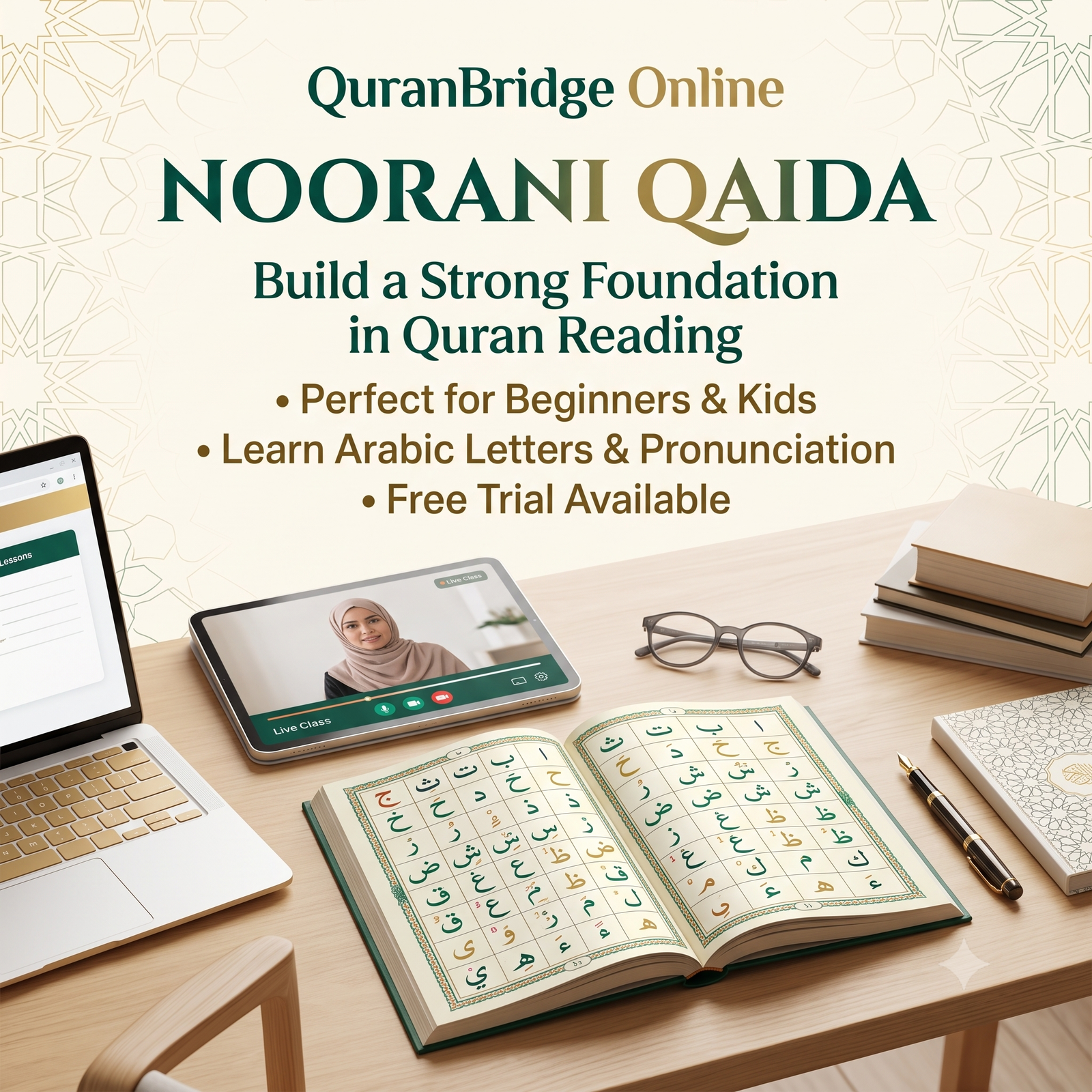
- Noorani Qaida
- Quran Reading
- Tajweed
- Quran Memorisation
- Basic Islamic learning
- Selected Tafseer
How Parents Can Support Their Child
Parents do not need to teach the lesson themselves.
Simple support can include:
Create a Routine
Try to keep lesson and practice times consistent.
Encourage Practice
A few minutes of review can be helpful.
Avoid Pressure
Encouragement is generally more useful than creating unnecessary pressure.
Celebrate Progress
Recognise small improvements and encourage your child to continue.
Final Thoughts
The right online Quran programme should fit your child's level, your family's schedule and your learning goals.
Rather than looking only for the largest number of courses, focus on structure, communication, suitability and consistency.
A simple learning routine that your child can maintain can provide a strong foundation for future Quran study.
Ready to explore your child's learning options?
Frequently Asked Questions
What age can children start Quran classes?
There is no single age that works for every child. The right starting point depends on the child's age, readiness and ability to focus during lessons.
Are online Quran classes suitable for children?
They can be suitable when the learning environment, lesson structure and teaching approach are appropriate for the child's age and level.
Should my child start with Noorani Qaida?
Many beginners benefit from foundation-level learning before moving into direct Quran reading.
How can parents help at home?
Parents can maintain a regular routine, encourage practice and stay informed about the child's learning goals.
Ready to begin your learning journey?
Join our structured online classes and learn from experienced instructors.